Hāngī Dinner in Rotorua
What a hāngī is (food cooked over heated stones in an earth oven, or by steam in Rotorua) and where to eat one: Mitai, Te Puia and Whakarewarewa (Oct 2026).
A hāngī is the Māori earth oven: food laid over stones heated in a pit, covered so the steam cooks it slowly for several hours, a way of cooking suited to feeding many people at once. In Rotorua hāngī have also long been cooked with the ground’s own geothermal steam. To eat one with a cultural evening, book Te Puia’s Te Pō: the welcome and performance, then a hāngī buffet over the geothermal valley, rated 4.7 from 479 reviews and from US$115 a person (checked October 2026).
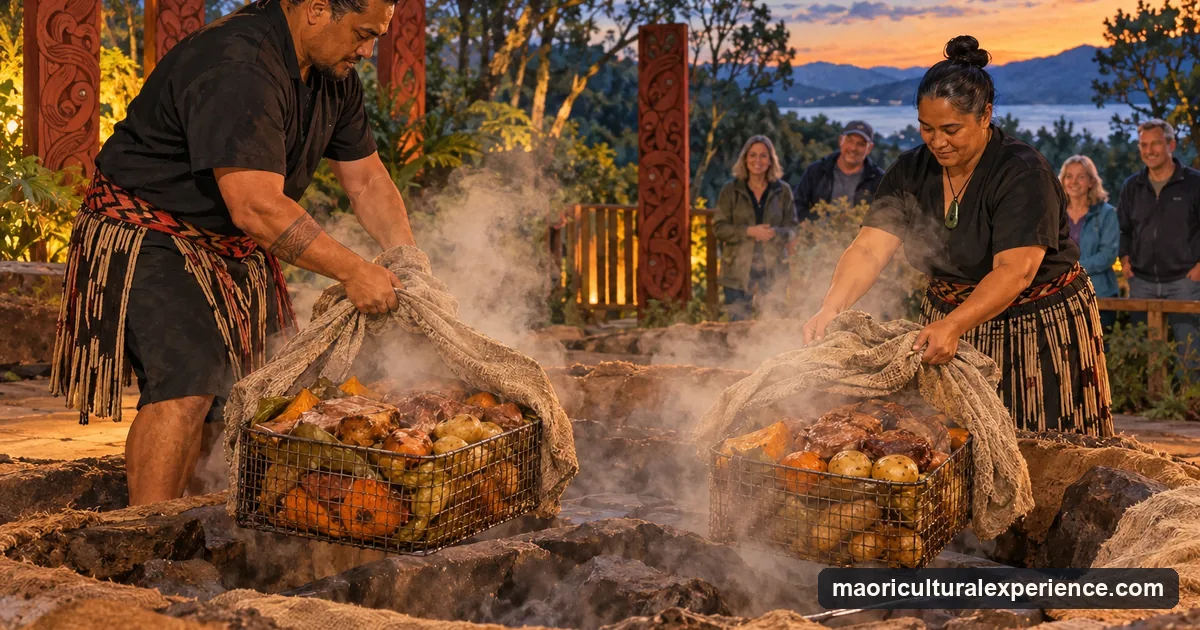
How a hāngī is cooked
Stones are heated in a fire in a pit. The food goes on top, meat first and vegetables above, and is covered with leaves, flax matting or, in recent times, cloth or sacking; water thrown over it makes steam, and earth piled on top holds the steam in. How long it cooks depends on the size of the hāngī, but it is hours, not minutes. Te Ara, the Encyclopedia of New Zealand, describes the hāngī as especially suited to preparing food for large numbers, which is why it is the meal of a gathering.
At a cultural evening you eat a hāngī as part of a buffet, with the meats and vegetables of the earth oven alongside other dishes and desserts.
Where to eat a hāngī in Rotorua
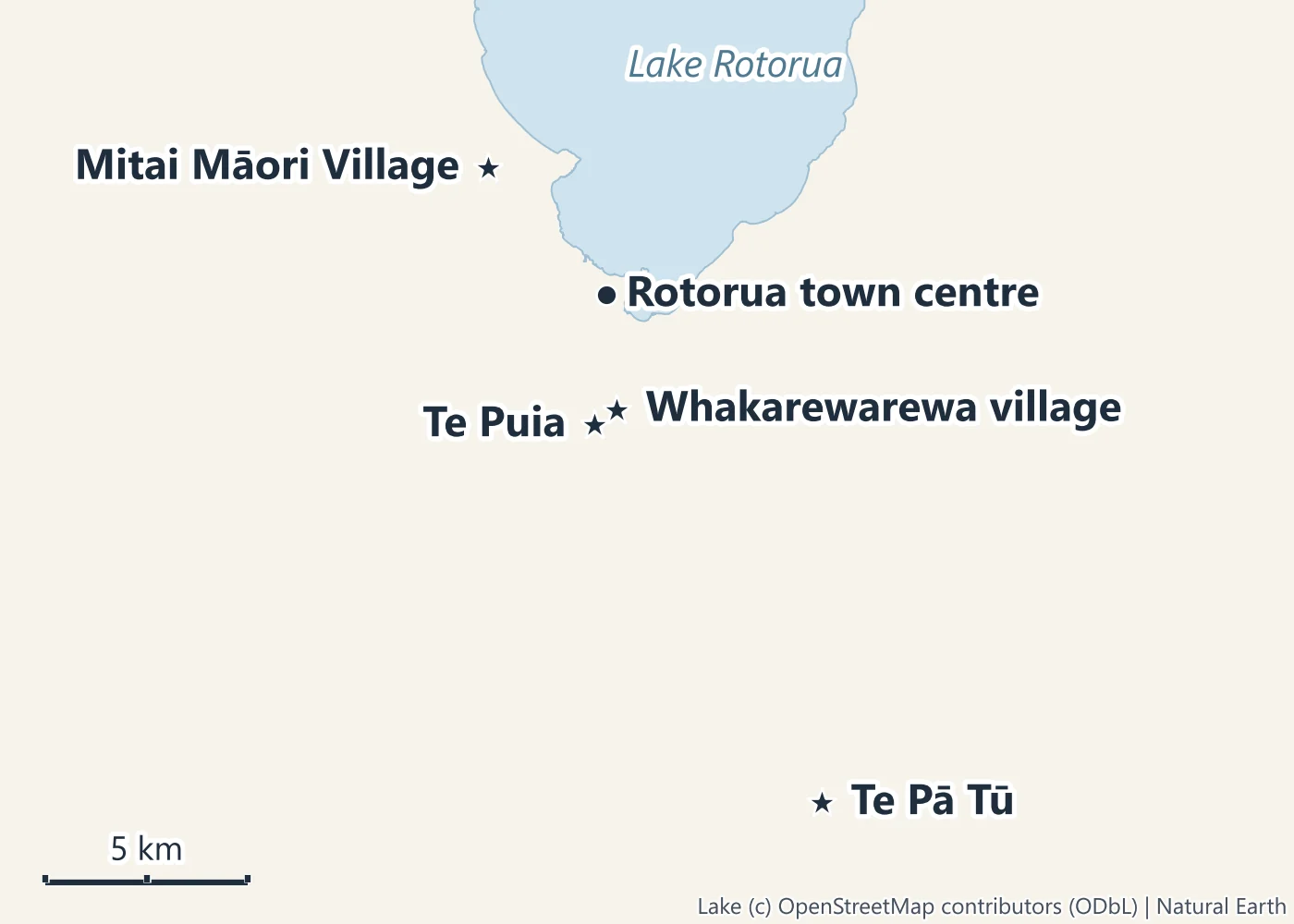
| Where | How it is served | Also in the evening | From | Rating |
|---|---|---|---|---|
| Te Puia, Te Pō | Hāngī buffet at Pātaka Kai, over the geothermal valley | Welcome and performance, Pōhutu Geyser | US$115 | 4.7 (479) |
| Mitai Māori Village | Hāngī buffet; you watch the hāngī lifted from the earth oven | Welcome, waka, performance, glow worms | US$102 | 4.7 (4,313) |
| Whakarewarewa from Auckland | A hāngī cooked with natural steam, with dessert | Village tour and performance, the Redwoods | US$213 | 24 reviews |
On a phone, swipe the table sideways for the prices and ratings.
Prices, ratings and review counts from GetYourGuide, checked October 2026. Prices are per person in US dollars.
Te Pā Tū’s evening serves forest canapés and a dinner by Māori chefs rather than a hāngī buffet; the evenings compared sets out the difference.
See open evenings at Te Puia →
Diets
A hāngī is meat-heavy. Mitai can meet some dietary requests but not all, and cannot offer vegan meals. Te Puia offers vegetarian and gluten-free options at its Te Pō dinner if you say so when you book. Te Pā Tū can cater for gluten-free and vegetarian guests, though its kitchen is not coeliac-approved.
Which one, by what you want from the meal
Te Puia, Te Pō
The performance in the meeting house, the geyser after dark, then the buffet.
Check dates →Mitai Māori Village
The hāngī is lifted from the earth oven in front of you, then served as a buffet.
See Mitai →Whakarewarewa from Auckland
A hāngī cooked with natural steam in the living village, with the village tour and a performance.
See the day trip →Prices and ratings from GetYourGuide, checked October 2026; operators change prices, so treat them as a guide, not a quote.
How a hāngī is cooked, after Te Ara, the Encyclopedia of New Zealand (the earth oven, the layering, steam and timing, and geothermal cooking in the Rotorua region). Menus, diets, prices and ratings from the GetYourGuide listings (167172, 115647, 980520, 427666), read in US dollars on 28 October 2026.
A Hāngī Buffet Beside the Geysers
Te Puia's Te Pō evening: a 30-minute welcome and performance in the carved meeting house, hot chocolate beside Pōhutu Geyser, then a hāngī buffet at the Pātaka Kai restaurant. About 2.5 hours, entrance included, as listed in October 2026.
Check Te Pō Dates