What Is a Pōwhiri?
The pōwhiri is the Māori welcome ceremony: the call, the speeches and songs, the hongi. What it means, what visitors do at one, and where you will be welcomed in Rotorua.
A pōwhiri (also spelt pōhiri, the form Te Puia uses) is the formal Māori ceremony of welcome, in which the hosts, the tangata whenua, receive their visitors, the manuhiri. It moves from a call of welcome, through speeches and songs, to the hongi and handshake that join the two groups, and usually ends with food. At a Māori cultural experience you take part as a visitor; Te Puia’s daytime Te Rā tour with its performance includes a pōhiri in the carved meeting house, rated 4.8 from 230 reviews and from US$81 a person (checked October 2026).
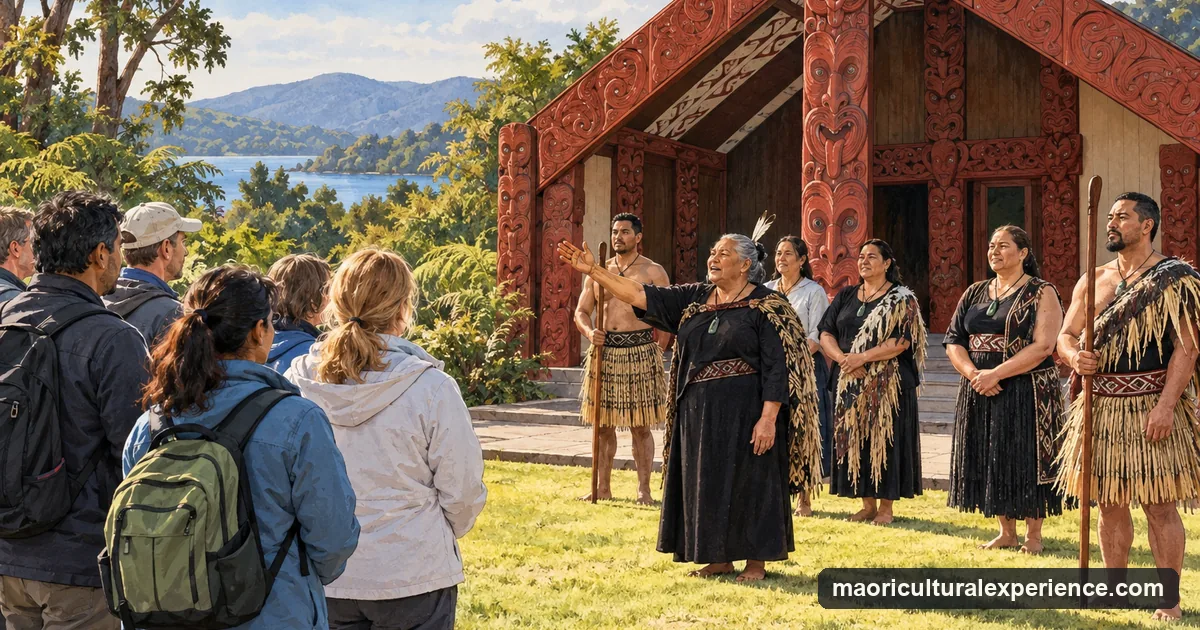
The parts of a pōwhiri
Protocol varies between iwi (tribes) and from one marae to the next, so what follows is the common shape, not a fixed script.
- The call. A woman of the hosts calls out, the karanga, and the visitors walk forward as she calls.
- The speeches. Speakers of the hosts and then of the visitors make formal speeches, the whaikōrero, and each speech is supported by a song, a waiata.
- The hongi. When the speeches and songs are finished, hosts and visitors greet one another with the hongi, pressing noses, and a handshake, the harirū.
- The meal. A feast, the hākari, usually follows.
At a performance for visitors the welcome is shorter than on a marae, but it keeps this shape. Mitai’s evening also includes a wero, a ceremonial challenge, as part of its welcome.
What you do as a visitor
You are not expected to know the protocol; the hosts explain it as it happens. A few things help:
- Your group’s representative. At Mitai the visitors choose one of their group as their chief before the welcome; the hosts tell that person what to do.
- Listen and follow. Do what the hosts ask, when they ask it; Te Puia asks its visitors to be prepared for a traditional Māori welcome.
- Photos. Te Puia allows photography but asks you to respect cultural sensitivities; at any welcome, follow what the hosts say.
See times for Te Puia's Te Rā with the performance →
Where you will be welcomed in Rotorua
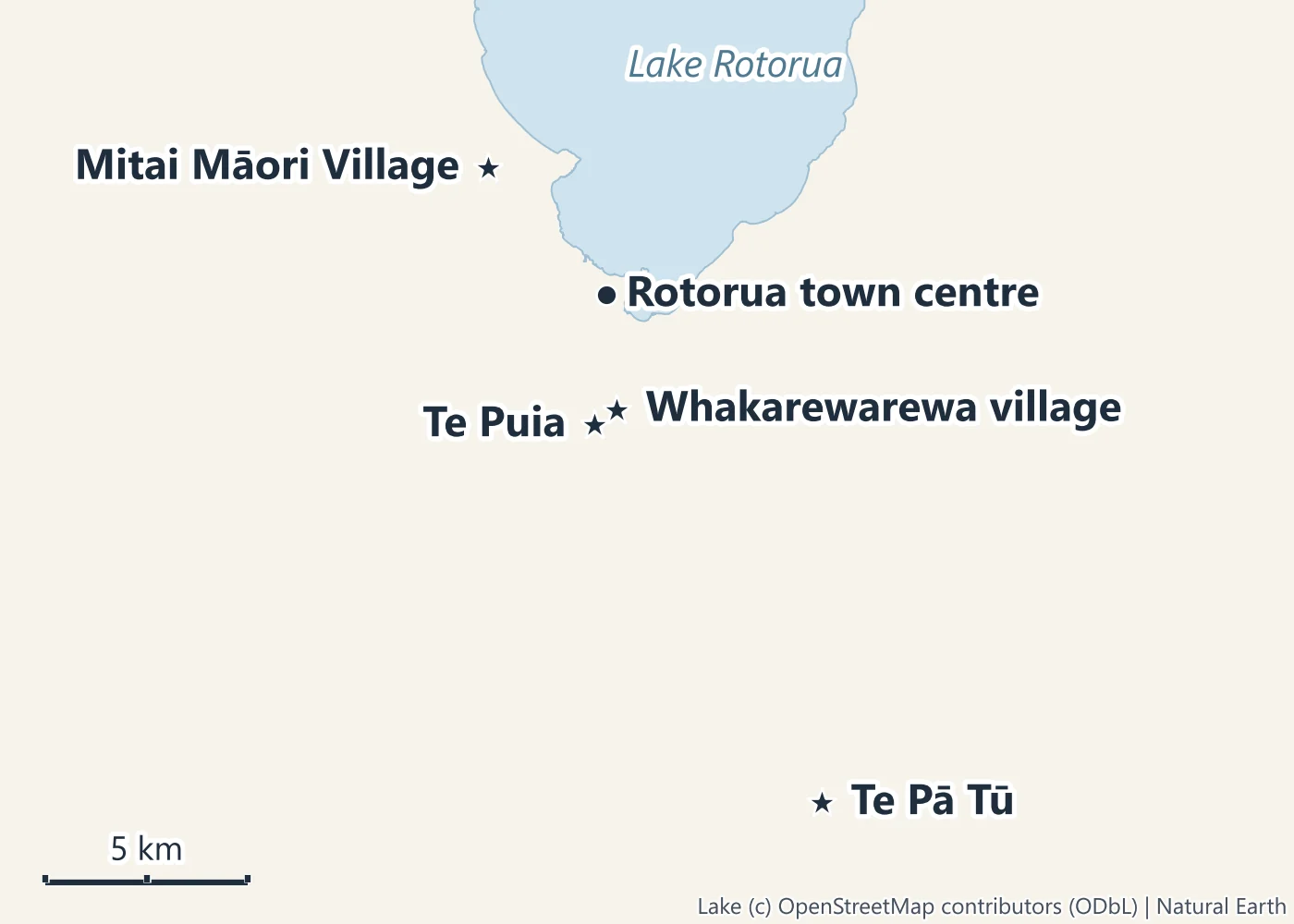
| Experience | The welcome | When | From | Rating |
|---|---|---|---|---|
| Te Puia, Te Rā with the performance | Pōhiri in the meeting house Te Aronui a Rua | Daytime, about 2 hours | US$81 | 4.8 (230) |
| Mitai Māori Village | Pōwhiri and wero, with a chief chosen from the visitors | Evening, about 3 hours | US$102 | 4.7 (4,313) |
| Te Puia, Te Pō | Pōhiri in the meeting house, then dinner | Evening, about 2.5 hours | US$115 | 4.7 (479) |
On a phone, swipe the table sideways for the prices and ratings.
Prices, ratings and review counts from GetYourGuide, checked October 2026. Prices are per person in US dollars.
Which one, by your day
Te Puia, Te Rā with the performance
The guided valley walk, the kiwi and the carving school, then the welcome and performance.
Check dates →Mitai Māori Village
The pōwhiri and wero, the waka on the stream, a hāngī buffet and the glow worms.
See Mitai →Te Puia, Te Pō
The welcome in the meeting house, Pōhutu Geyser after dark and a hāngī buffet.
See Te Pō →Prices and ratings from GetYourGuide, checked October 2026; operators change prices, so treat them as a guide, not a quote.
The haka you will see after the welcome is explained in what the haka is.
The parts of the pōwhiri after Te Ara, the Encyclopedia of New Zealand, and newzealand.com; protocol varies between iwi and marae. Programmes, prices and ratings from the GetYourGuide listings (997210, 115647, 167172), read in US dollars on 28 October 2026.
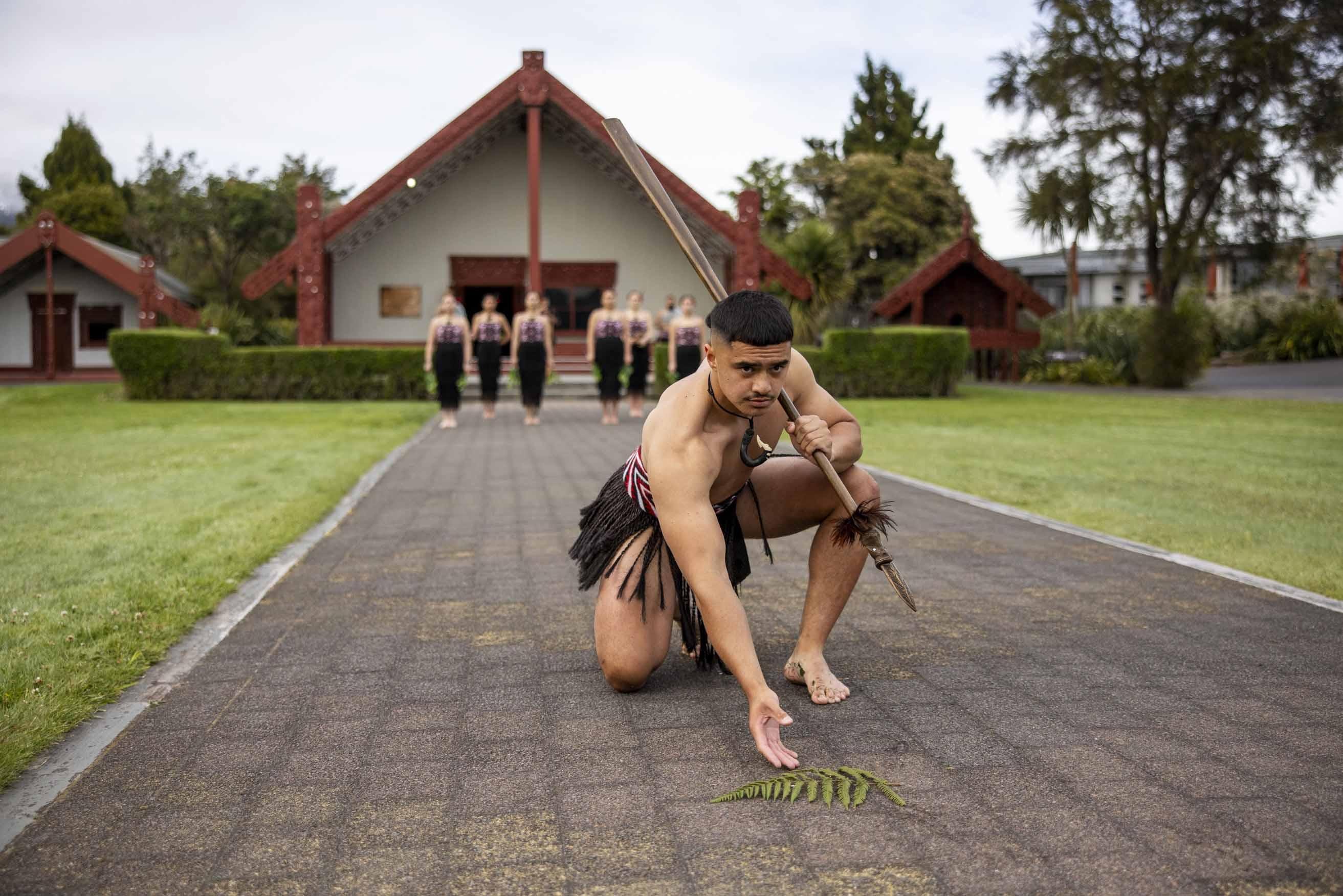
Te Puia by Day, with the Welcome and Performance
A 90-minute guided walk through Te Puia's geothermal valley, Pōhutu Geyser, the Kiwi Conservation Centre and the New Zealand Māori Arts and Crafts Institute, then a performance in the carved meeting house that includes a pōhiri. About 2 hours, as listed in October 2026.
Check Te Rā Dates